Wholesale order taking has changed dramatically over the last few years. Sales representatives no longer carry printed catalogs or return to the office with handwritten order forms. Customers expect accurate pricing, inventory information, and order confirmations before the conversation is over. That puts much more pressure on the software field teams use every day.
The best order taking apps do more than capture product quantities. They help representatives access customer history, check inventory, apply pricing, and send completed orders directly into the rest of the business.
Some platforms stop there. Others continue through deliveries, invoicing, and retailer ordering.
Here are seven solutions worth comparing.
1. Orders in Seconds (OIS)
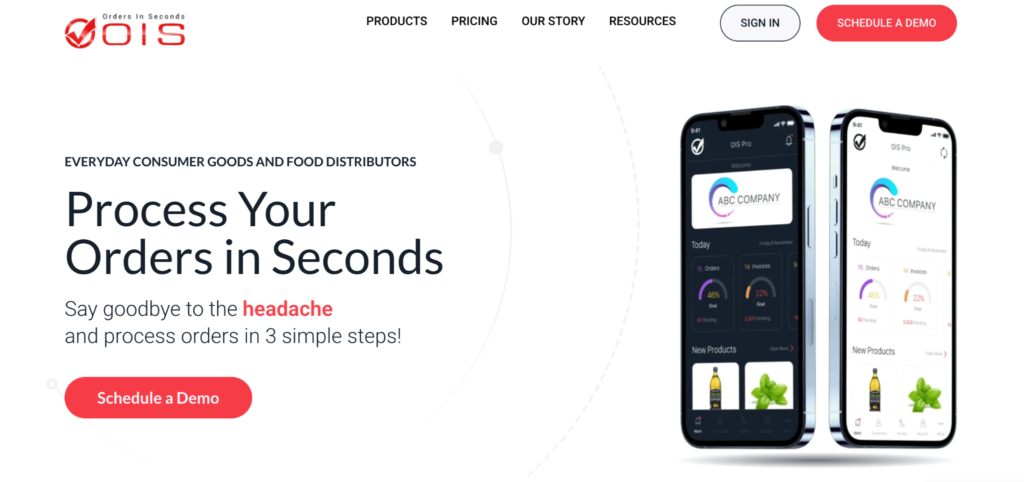
Orders in Seconds has always focused on helping sales representatives process customer orders quickly.
The platform provides access to customer pricing, product catalogs, order history, and account information directly from a mobile device. Representatives can create orders while visiting customers and synchronize them with QuickBooks without waiting until the end of the day.
Its straightforward design has made it a popular choice among distributors that prioritize speed and simplicity.
Highlights include:
- Mobile order capture
- Customer pricing
- Digital catalogs
- Offline functionality
- Customer management
- QuickBooks Online integration
- QuickBooks Desktop integration
- Sales reporting
The software stays focused on order entry instead of expanding into broader operational areas such as merchandising or route accounting.
Worth considering when
Fast wholesale order entry is the primary goal for your field sales team.
2. SimplyDepo
For many distributors, taking an order is only the beginning of the customer’s visit. Products still need to be delivered, invoices created, payments collected, and customer records updated before the work is complete. SimplyDepo connects those activities inside one mobile platform instead of separating them into different systems.
Sales representatives can capture wholesale orders, review customer information, update routes, create invoices, collect payments, and synchronize everything with QuickBooks Online without returning to the office. If merchandising is part of the visit, shelf audits and photo reporting can also be completed from the same application.
Key capabilities include:
- Wholesale order capture
- Customer account management
- Route planning
- Mobile invoicing
- Van sales
- Proof of delivery
- B2B ordering portal
- Shelf audits
- Offline functionality
- Native QuickBooks Online synchronization
Instead of treating order taking as an isolated task, SimplyDepo keeps it connected to the rest of the wholesale sales workflow.
Best fit for
Distributors looking to combine wholesale ordering with deliveries, field sales, and retail execution.
3. Skynamo

Skynamo approaches wholesale sales from a relationship management perspective. The software helps representatives prepare for customer visits, review account history, recommend products, and capture orders while keeping customer information organized across the business.
For companies where repeat business depends on long-term customer relationships, those CRM capabilities are just as valuable as the ordering tools themselves.
Core functionality includes:
- Mobile ordering
- Customer visit planning
- CRM features
- Product catalogs
- Offline access
- ERP integrations
- Sales analytics
- Customer history
Rather than focusing on delivery operations, Skynamo keeps its attention on helping representatives become more effective during customer visits.
A strong option for
Field sales organizations where account management plays a central role in wholesale sales.
4. Pepperi
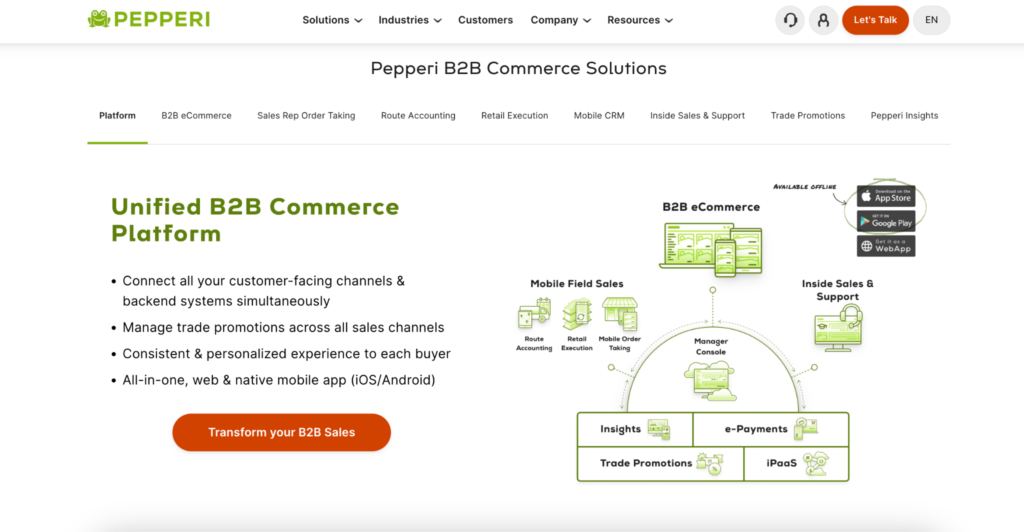
Pepperi is designed for organizations where order taking is only one step in a larger commercial process.
The platform combines mobile ordering with B2B commerce, retail execution, customer-specific pricing, promotions, and workflow automation. That broader scope makes it especially attractive to enterprise distributors managing large product catalogs and complex pricing structures.
Instead of adapting business processes to the software, companies can configure many workflows around their existing operations.
Key capabilities include:
- Mobile wholesale ordering
- B2B commerce
- Customer pricing
- Retail execution
- Workflow automation
- ERP integrations
- Multi-language support
- Advanced reporting
Pepperi requires more planning than many lightweight ordering apps, but it offers flexibility that larger organizations often need.
Best suited to
Enterprise wholesale distributors managing complex sales processes and multiple territories.
5. Orderwerks
Orderwerks places retailer ordering at the center of the customer experience. Customers can place orders through a branded B2B portal while field representatives continue supporting accounts in person. That combination allows distributors to serve customers who prefer self-service without removing the sales team from the relationship.
The platform also supports several regulated industries where ordering workflows require additional controls.
Its feature set includes:
- B2B ordering portal
- Mobile order capture
- Customer pricing
- Route management
- Offline functionality
- Multi-accounting integrations
- QuickBooks support
Businesses looking to balance customer independence with field sales often find this approach appealing.
A good option when
Retailers want the flexibility to place routine orders themselves while sales representatives focus on larger opportunities.
6. inSitu Sales
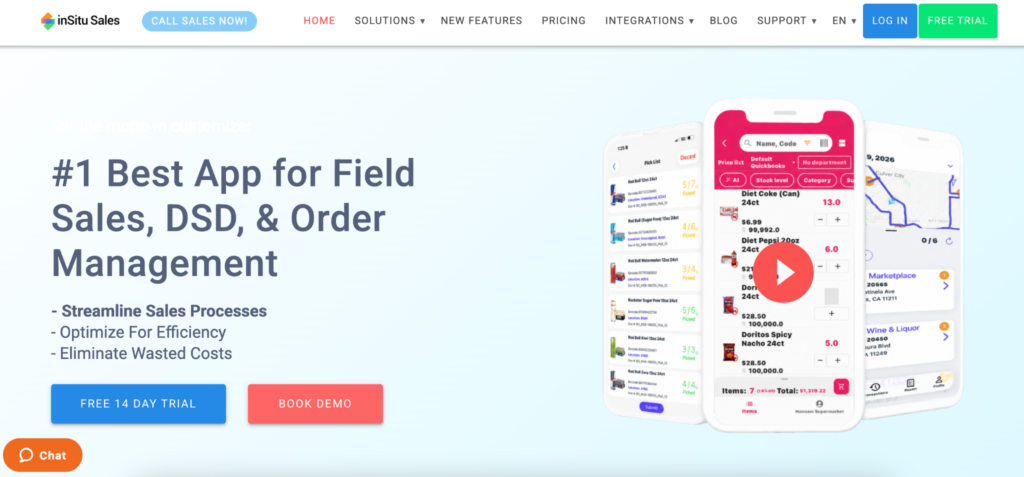
inSitu Sales extends mobile ordering beyond customer visits. The platform connects order capture with warehouse operations, dispatching, delivery management, and inventory control, helping distributors coordinate multiple departments without relying on separate systems.
That operational focus makes it useful for businesses where order entry immediately affects warehouse activity.
Highlights include:
- Mobile ordering
- Warehouse management
- Dispatch tools
- Inventory control
- Delivery scheduling
- Customer management
- Route support
- Multi-language interface
Rather than concentrating only on selling, inSitu keeps information moving smoothly from the customer visit through fulfillment.
Designed for
Distributors that want wholesale ordering connected directly with warehouse and delivery operations.
7. B2B Wave
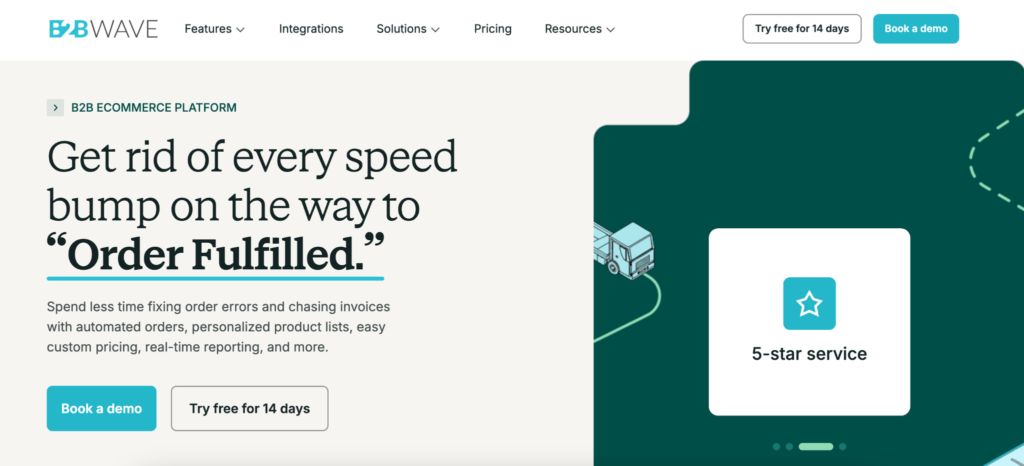
Unlike most platforms in this comparison, B2B Wave shifts much of the ordering process to the customer.
Instead of waiting for a sales representative to visit, retailers can log into a branded online portal, browse products, check pricing, and place orders whenever it’s convenient. Field sales teams remain important, but their role becomes more consultative than transactional.
That approach works well for distributors with established customer relationships and predictable purchasing patterns.
Core capabilities include:
- Self-service B2B ordering
- Customer-specific pricing
- Product catalogs
- Order history
- QuickBooks integration
- Xero integration
- Stripe support
- Customer portal
B2B Wave isn’t designed for route sales or direct store delivery, but it offers an efficient ordering experience for businesses focused on wholesale eCommerce.
Worth considering when
Many of your customers prefer placing repeat orders online instead of waiting for a sales visit.
How Self-Service Ordering Changes the Sales Rep’s Role
Some distributors worry that customer ordering portals reduce the need for field sales representatives. In practice, the opposite often happens.
When customers handle routine repeat orders themselves, representatives spend less time entering predictable purchases and more time discussing new products, promotions, merchandising opportunities, and account growth. The conversation shifts from administration to selling. For many wholesale businesses, that’s a much better use of field sales resources.
What to Look for in a Wholesale Ordering App in 2026
Fast order entry is important, but it shouldn’t be the only deciding factor. Look for software that gives representatives access to customer-specific pricing, product availability, account history, and offline ordering. Integration with accounting software is equally valuable because it eliminates repeated data entry after customer visits.
If your business also manages deliveries or merchandising, it’s worth considering whether those activities can happen inside the same platform rather than adding another application to the workflow.
FAQ
What is a wholesale order taking app?
A wholesale order taking app allows field sales representatives or wholesale customers to create product orders using a mobile device or online portal.
Who uses wholesale ordering software?
Wholesale distributors, manufacturers, consumer goods brands, and field sales teams serving retail or commercial customers.
Can wholesale ordering apps work offline?
Many mobile platforms support offline operation, allowing representatives to continue taking orders without an internet connection.
What’s the difference between a wholesale ordering app and a B2B ordering portal?
Wholesale ordering apps are primarily designed for field sales representatives, while B2B portals allow customers to place orders directly without assistance.
Better Ordering Creates Better Customer Visits
The strongest wholesale ordering platforms do more than collect product quantities. They simplify conversations with customers, reduce manual administration, and keep sales, accounting, warehouse, and delivery teams working from the same information. As wholesale operations continue to evolve, software that connects those workflows will usually deliver more value than an order form alone.